
Community Highlight: Atley Elliott's Approach to Science and Stewardship


For Atley Elliott, managing land goes beyond just raising cattle. It's about creating healthy ecosystems where livestock, wildlife, and people all thrive together. As the Farm Biologist and Wildlife Management Area (WMA) Manager at Caitlyn Farms Sustainably Raised Beef and the White Oak Creek Wildlife Management Area, Atley wears many hats. She oversees the farm's grass-fed beef operation while leading habitat restoration projects, developing grazing plans, coordinating outreach events, and monitoring wildlife populations. It's a role that blends science, agriculture, and conservation every single day.
"I run our grass-fed beef operation and manage our habitat restorations, grazing plan, outreach events, and wildlife biomonitoring efforts here on the farm," she explains.
Representation Matters
One of the driving forces behind Atley's work is setting a positive example for other young practitioners.
"It is really important to me that young boys and girls see other women working the land," she says. "I grew up watching my Grandmommy work cattle with my Poppy, and I want all young people interested in agriculture, wildlife, or land management to know it is an attainable career, no matter what background you come from."
That visibility matters. As more women step into leadership roles in ranching, wildlife management, and conservation, they help redefine what these careers look like and inspire the next generation of land stewards.

Learning New Skills
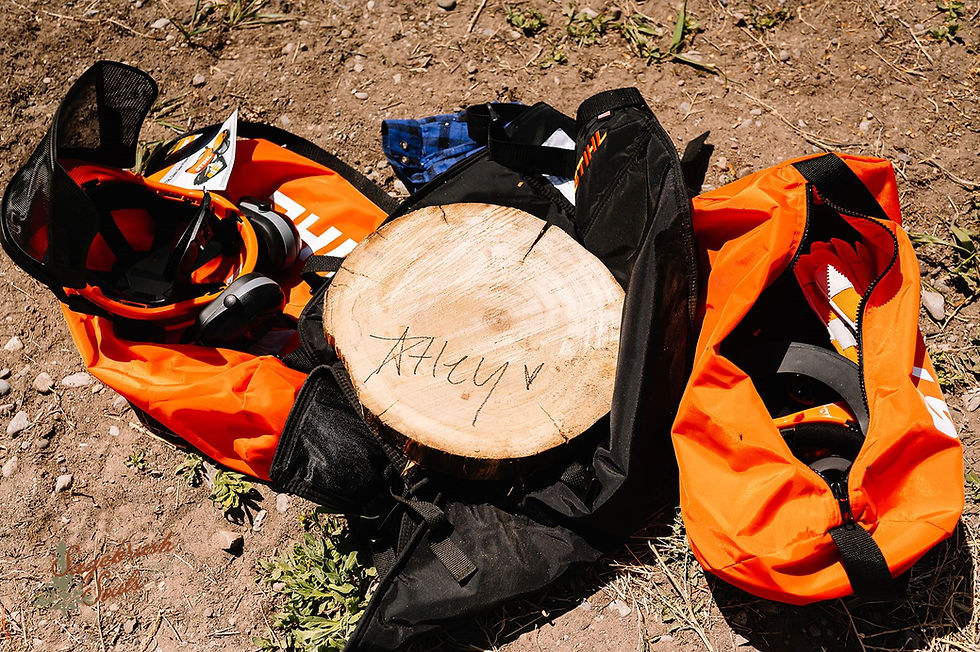
One recent skill that has made an immediate impact on Atley's work is chainsaw operation, which she perfected right here at Redwing's very own Buckin' Babes workshop.
"I loved learning how to properly maintain and safely operate my saw," she says. "It was great learning from a supportive group of women all from different backgrounds."
Since then, those skills have become part of Atley's everyday land management.
"We have been implementing that skill by managing invasives and clearing trails and fence lines around the property."
The experience reinforced an important lesson: practical skills are powerful, but learning them alongside a community of supportive women makes them even more meaningful.

The Work People Don't See
Social media often highlights cattle moves, beautiful landscapes, and wildlife encounters, but Atley knows that successful land management is built on hours of planning behind the scenes.
"It may not be as exciting, but planning is one of the most time-consuming and important aspects of managing our herd, land, and wildlife that people never see on screen."
Those plans touch nearly every part of the operation.
"We spend countless hours planning rotations, plantings, trail and fence maintenance, wildlife biomonitoring, markets, and outreach events."
Thoughtful planning allows the farm to balance livestock production, habitat restoration, and community engagement while ensuring every management decision supports long-term ecological health.
One Tool She Never Leaves Behind
We asked Atley what piece of equipment she can't live without, and the answer came to her quickly.
"It kills me not to have a knife on me of some kind."
Whether it's a pocketknife, multitool, or box cutter, it's a tool she reaches for several times every day.
"Anyone who has had to cut net wrap with a fencing screw they found in the tractor will understand."
It's a humorous reminder that on a working farm, the smallest tools are often the most indispensable.
Stewardship for the Future
Atley's work reflects a growing movement within agriculture that recognizes healthy soils, thriving wildlife, productive grazing systems, and resilient rural communities are deeply connected. By combining ecological science with practical ranch management, she's helping demonstrate that working lands can be both economically productive and environmentally resilient. Perhaps most importantly, she's helping ensure the next generation sees that there is room for everyone in agriculture and conservation. Because when young people can see themselves reflected in the people managing the land, they're more likely to imagine themselves doing the same.


Photos By: Sagebrush Souls Photography


Comments